
N
Introduction:
Pink salt, due to its typical rosy color, rich mineral and apparent purity, has become one of the most recognized natural salts. It is mostly used in culinary applications, wellness products, decorative items, spa treatments, and industrial manufacturing. Nowadays, more consumers pay interest in natural and minimally processed foods has significantly increased the demand for pink salt across international markets.
Unlike refined table salt, pink salt is typically mined from ancient underground salt deposits that formed millions of years ago when prehistoric seas evaporated. These deposits remained protected beneath layers of rock, helping preserve the salt from many modern environmental contaminants. The pink coloration results from naturally occurring trace minerals, primarily iron compounds, along with numerous other naturally occurring elements.
In this article we will explore where pink salt is found around the globe, which country has the largest and most abundant reserves, how pink salt is extracted, its mineral composition, and why it continues to be valued worldwide.
Why is this salt called Pink Salt?
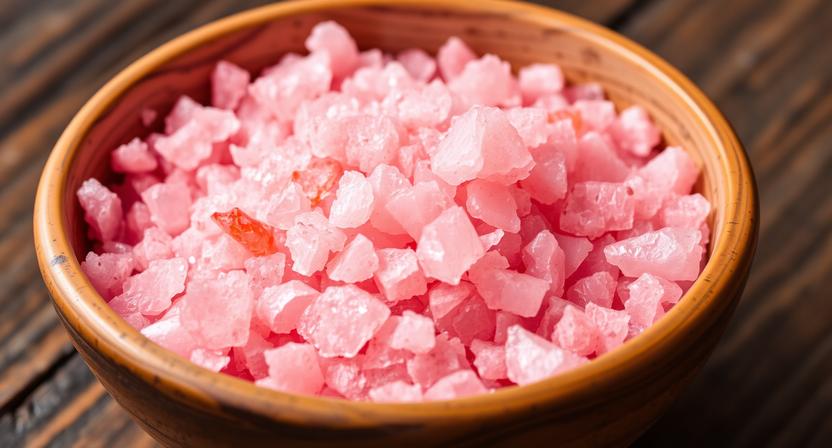
Pink salt is a natural rock salt largely composed of sodium chloride (NaCl). It is widely distinct from ordinary table salt because it contains traces of naturally occurring minerals that give it distinctive pink, reddish, or orange hues.
The color intensity differs due to the concentration of minerals present in different sections of a salt deposit. Some crystals look light pink, while others display deeper red or orange shades.
Pink salt is commonly available in several forms, including:
- Fine powder
- Coarse crystals
- Cooking slabs
- Salt blocks
- Bath salts
- Animal salt licks
- Decorative lamps
- Industrial-grade salt
- Fine powder
- Coarse crystals
- Cooking slabs
- Salt blocks
- Bath salts
- Animal salt licks
- Decorative lamps
- Industrial-grade salt
It became an important export product for countries possessing a significantly large stock of natural deposits due to its versatility and demand across the globe.
Geological Formation of Pink Salt
How did pink salt originate? Its existence is marked as hundreds of millions of years ago during the period when ancient inland seas gradually evaporated. Thick layers of mineral-rich salt accumulated on the seabed when seawater evaporated.
Over geological time, tectonic movements buried these deposits beneath mountains and sedimentary rock formations. Immense pressure transformed these layers into solid rock salt formations while protecting them from many external contaminants.
Today, miners excerpt pink salt from underground mines instead of producing it through modern seawater evaporation.
This ancient geological history adds a reputation for pink salts as one of nature’s oldest mineral resources.
Worldwide Locations Where Pink Salt Is Found?
Although pink salt is strongly allied with one particular region, deposits exist in several countries around the world.
Some major locations include:
Pakistan
Pakistan has the largest and most renowned pink salt deposits in the world. The country’s Salt Range in Punjab Province contains enormous reserves of high-quality Himalayan pink salt.
Major mining areas include:
- Khewra
- Warcha
- Kalabagh
- Bahadur Khel
- Jatta
The Khewra Salt Mine is internationally recognized as the world’s most famous source of natural pink salt among these.
India
India consists of several rock salt deposits, especially in regions adjacent to the Himalayan geological system. However, these reserves are considerably smaller than those found in Pakistan.
Indian rock salt is often marketed locally for culinary and traditional uses.
Poland
Historically, Poland had underground salt mines that produced rock salt. While these mines are famous for tourism and historical importance, they are not major global suppliers of pink Himalayan salt.
Iran
Iran possesses various natural rock salt deposits that include white, blue, orange, and pink. Iranian pink salt has gained fame in export markets due to its unique appearance.
Chile
Chile also contains natural mineral salt deposits in desert regions where evaporation has concentrated mineral-rich salts over thousands of years.
Although commercially has importance, Chilean pink salt production remains much smaller than Pakistan’s.
Peru
Peru has a terraced salt pond in the Sacred Valley and has naturally occurring mineral-rich salt deposits. These salts differ quietly in composition and harvesting methods from underground pink rock salt.
United States
The United States has substantial rock salt resources which is mainly used for industrial purposes, road de-icing, and food production. However, naturally occurring pink salt deposits are rather limited compared to Pakistan.
Which Country Do You think is the Most Abundant in Pink Salt?
Pakistan is extensively recognized as owning the world’s largest and highest-quality reserves of pink Himalayan salt.
The majority of commercially available Himalayan pink salt sold worldwide originates from Pakistan’s Salt Range.
According to geologists, they estimate that Pakistan’s salt reserves contain billions of tons of rock salt, sufficient to support mining operations for many centuries under current production levels.
Several factors contribute to Pakistan’s dominance:
- Extremely large underground deposits
- High mineral purity
- Ancient geological formations
- Established mining infrastructure
- Significant export capacity
- International market recognition
Today, Pakistan is one of the largest exports of pink salt to more than 100 countries for culinary, decorative, pharmaceutical, agricultural, and industrial applications.
The Khewra Salt Mine
The Khewra Salt Mine is considered one of the oldest and largest salt mines in the world.
It is in Pakistan, the Province Punjab, it has been mined for centuries and appeals hundreds of thousands of visitors each year.
Notable characteristics include:
- Extensive underground tunnels
- Massive salt chambers
- Naturally coloured pink salt formations
- Salt mosque
- Salt bridges
- Underground lake
- Tourist railway
The Khewra mine assists both commercial mining operations and tourism, making it one of Pakistan’s most valuable natural resources.
Pink Salt Mining Process
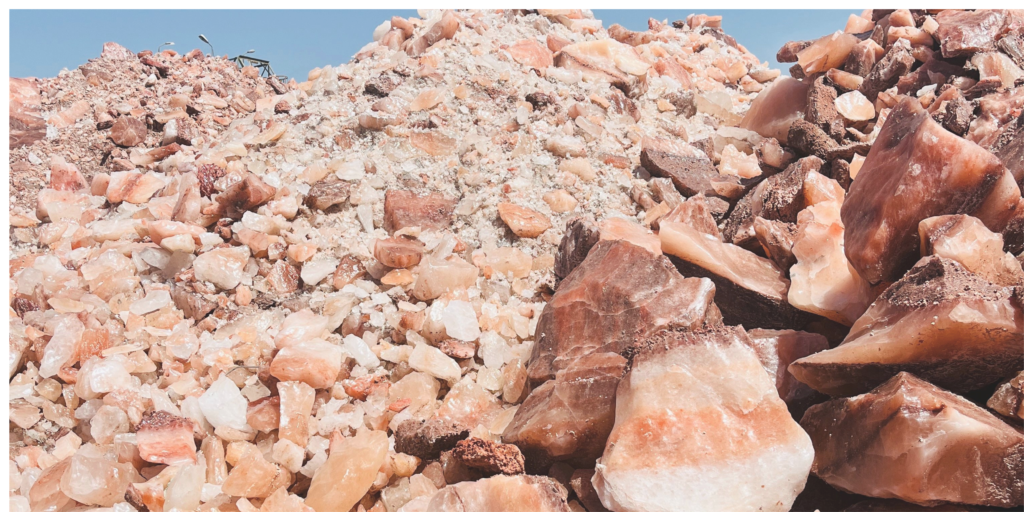
Unlike sea salt, pink salt is extracted through underground mining.
The general process includes:
1. Geological Survey
First and foremost, mining begins with geological exploration to identify suitable rock salt deposits.
2. Controlled Excavation
Miners carefully remove salt using drilling and cutting equipment while preserving mining stability.
3. Transportation
The heap of salt blocks is transported to processing facilities.
4. Sorting
Workers separate salt based on:
- Color
- Purity
- Crystal size
Proposed commercial use
5. Crushing and Grinding
Depending on customer requirements, salt may be processed into:
- Fine powder
- Medium crystals
- Coarse crystals
- Salt blocks
6. Packaging
The finished product is packaged for domestic consumption or export.
Many producers minimize processing to preserve the salt’s natural appearance and mineral content.
Mineral Composition of Pink Salt
Pink salt consists primarily of sodium chloride, typically making up around 95–98% of its composition. The rest of the percentage contains trace minerals and naturally occurring elements.
The rose pink color primarily comes from iron compounds.
Common minerals and trace elements found in pink salt include:
- Sodium
- Chloride
- Potassium
- Calcium
- Magnesium
- Iron
- Zinc
- Copper
- Manganese
- Phosphorus
- Sulphur
- Chromium
- Boron
- Silicon
- Fluoride
- Bromide
- Iodine (naturally occurring in small amounts)
- Lithium
- Selenium
- Strontium
The exact mineral profile varies depending on the mining location and geological characteristics of the deposit.
Do You Know How Many Minerals Are Found in Pink Salt?
One of the most frequently repeated claims is that pink salt contains “84 minerals.”
The research analysis has proved that there are approximately 84 naturally occurring minerals and trace elements found in the Himalayan pink salt. However, not every sample contains all these minerals in identical amounts. The exact composition depends on the specific section of the mine and the laboratory methods used for analysis.
Most of these minerals exist only in trace or ultra-trace quantities.
The principal components remain:
- Sodium chloride
- Iron compounds
- Potassium
- Calcium
- Magnesium
While the presence of numerous trace elements adds to pink salt’s distinctive appearance, most are present in quantities too small to make a significant nutritional contribution when consumed in normal dietary amounts.
Different shades in Pink Salt
The characteristic pink colour is chiefly caused by iron oxide and other naturally occurring mineral impurities trapped during their geological formation within the salt crystals
Distinction in mineral concentrations produce different shades, including:
- Light pink
- Rose pink
- Deep pink
- Orange
- Reddish-orange
Higher iron concentrations generally produce darker colours.
Industrial and Commercial Uses
Pink salt has applications in numerous industries.
Food Industry
The most common usage of pink salt is for cooking and seasoning ingredient.
Applications include:
- Table seasoning
- Cooking
- Baking
- Meat curing
- Gourmet products
Decorative Products of Pink Salt
Pink salt is widely manufactured into:
- Salt lamps
- Candle holders
- Decorative bricks
- Wall panels
Air Purification:
It is used as a air purification. It is claimed that the salt absorbs airborne dust, pollen, and smoke, though scientific proof is scarce. Warming the salt is proclaimed to release negative ions, which results in increases serotonin and relieves stress, clearing the air reduces asthma and allergy symptoms. The soft glow is believed to limit blue light exposure, helping the brain wind down at night
Spa and Wellness
Many wellness services use pink salt in:
- Bath salts
- Salt scrubs
- Salt therapy rooms
- Massage stones
Livestock
Compressed salt blocks provide mineral supplementation for cattle, sheep, goats, horses, and other livestock.
Industrial Applications
Industrial-grade rock salt is used in:
- Chemical manufacturing
- Water treatment
- Ice control
- Textile processing
Global Demand for Pink Salt
Demand for pink salt continues to grow due to increasing consumer interest in natural food products and specialty ingredients.
Major importing regions include:
- North America
- Europe
- Middle East
- East Asia
- Australia
Exported products include:
- Edible salt
- Salt lamps
- Cooking slabs
- Bath products
- Animal salt blocks
- Industrial salt
The popularity of pink salt across the world of gourmet cooking has further expanded international demand.
Economic Importance
Pink salt contributes primarily give boost to employment, mining, transportation, manufacturing, and exports in producing countries.
Pakistan, in particular, benefits from:
- Export revenue
- Job creation
- Tourism
- Manufacturing industries
- International trade partnerships
The overall processing and export of value-added products such as lamps, tiles, and decorative items further increase the economic value of this natural resource.
Supportability and Responsible Pink Salt Mining
Modern mining operations increasingly emphasize workable resource management.
Responsible practices include:
- Controlled extraction methods
- Worker safety measures
- Environmental monitoring
- Efficient waste management
- Preservation of geological formations
As underground salt deposits are remarkably large, carefully managed mining can support long-term production while minimizing environmental impacts.
Pink salt is one of the world’s most treasured natural mineral resources, valued for its distinctive appearance, ancient geological origin, and wide range of commercial applications. Although small deposits exist in countries such as India, Iran, Poland, Chile, Peru, and the United States, Pakistan remains the undoubted global leader in both the abundance and quality of natural pink salt reserves.
The extensive deposits within Pakistan’s Salt Range, the renowned Khewra Salt Mine become the largest supplier of the Himalayan pink salt, available in international markets. These assesst are estimated to contain billions of tons of rock salt, ensuring a stable supply for generations ahead.
https://www.theworldtreasures.com
Pingback: PINK SALT BENEFITS AND WHAT DISTINGUISHES IT FROM EPSOM SALT - World Treasures